
Cloudy pond water: complete causes and solutions
Are you looking at your garden pond and noticing that the water, which was once crystal clear, is now green, milky, or brownish? This problem, as discouraging as it may be, is one of the most common for pond owners. The good news: there are effective solutions for every type of turbidity. In this article, we review the main causes of cloudy water and the appropriate remedies to restore a healthy and clear pond.
Why is my pond water becoming cloudy?
Cloudy water is not a single phenomenon: it can result from several very distinct causes. Correctly identifying the root of the problem is the first essential step before acting. Misdiagnosing the issue risks worsening the situation or spending money unnecessarily on unsuitable products.
The main causes of cloudy water
1. Green water: proliferation of microscopic algae
Green water is by far the most common cause. It is triggered by an explosion of phytoplankton — microscopic algae in suspension — that turns the water green. This phenomenon occurs mainly in spring and summer when conditions are met: plenty of sunlight, excess nutrients (phosphates, nitrates), and high temperatures.
Aggravating factors include fish overcrowding (which releases ammonia-rich waste), insufficient filtration, the absence or lack of aquatic plants, and excessive fish feeding.
2. Milky or white water: suspended particles
If your water takes on a whitish or milky hue, it is generally due to very fine mineral or organic particles in suspension. This phenomenon often appears right after planting new aquatic plants, during the initial filling of the pond with hard water, or following a disturbance of the bottom. Beneficial bacteria can also give this milky appearance during the biological startup of a new pond.
3. Brown or yellowish water: tannins and organic matter
Water that leans toward brown or yellow is often the result of an excess of decomposing organic matter: dead leaves that have fallen into the pond, rotting vegetation, or submerged wood releasing tannins. This type of turbidity is most visible in autumn, but can occur in any season if maintenance is insufficient.
4. Excess nutrients and phosphates
Phosphates are fuel for algae. They come from fish food, animal waste, rainwater runoff from a fertilized lawn, and even some tap water that is particularly rich in minerals. As soon as phosphate levels exceed 0.035 mg/L, algae inevitably proliferate.
5. Faulty or undersized filtration
A filter with insufficient flow, clogged filter media, or a biological surface area that is too small cannot properly process the water. The direct consequence is an accumulation of waste in suspension and a degradation of water quality. Ideally, the filter should circulate the entire volume of the pond every 2 hours.
6. Fish overcrowding
Each fish produces nitrogenous waste that feeds algae and clouds the water. The general rule recommends not exceeding 25 cm of fish per 1,000 liters of water. Beyond this, the biological load becomes too great for the filtration and plants to absorb the excess nutrients.
Practical solutions for each type of turbidity
Fighting green water caused by microscopic algae
A UV lamp is the most effective tool against green water. Ultraviolet radiation destroys the DNA of suspended algae, clumps them into filterable clusters, and sanitizes the water thoroughly. It must be installed at the outlet of the biological filter so as not to destroy beneficial bacteria. A properly sized lamp (count on approximately 10 W per 10,000 liters) will clarify the water in 5 to 10 days.
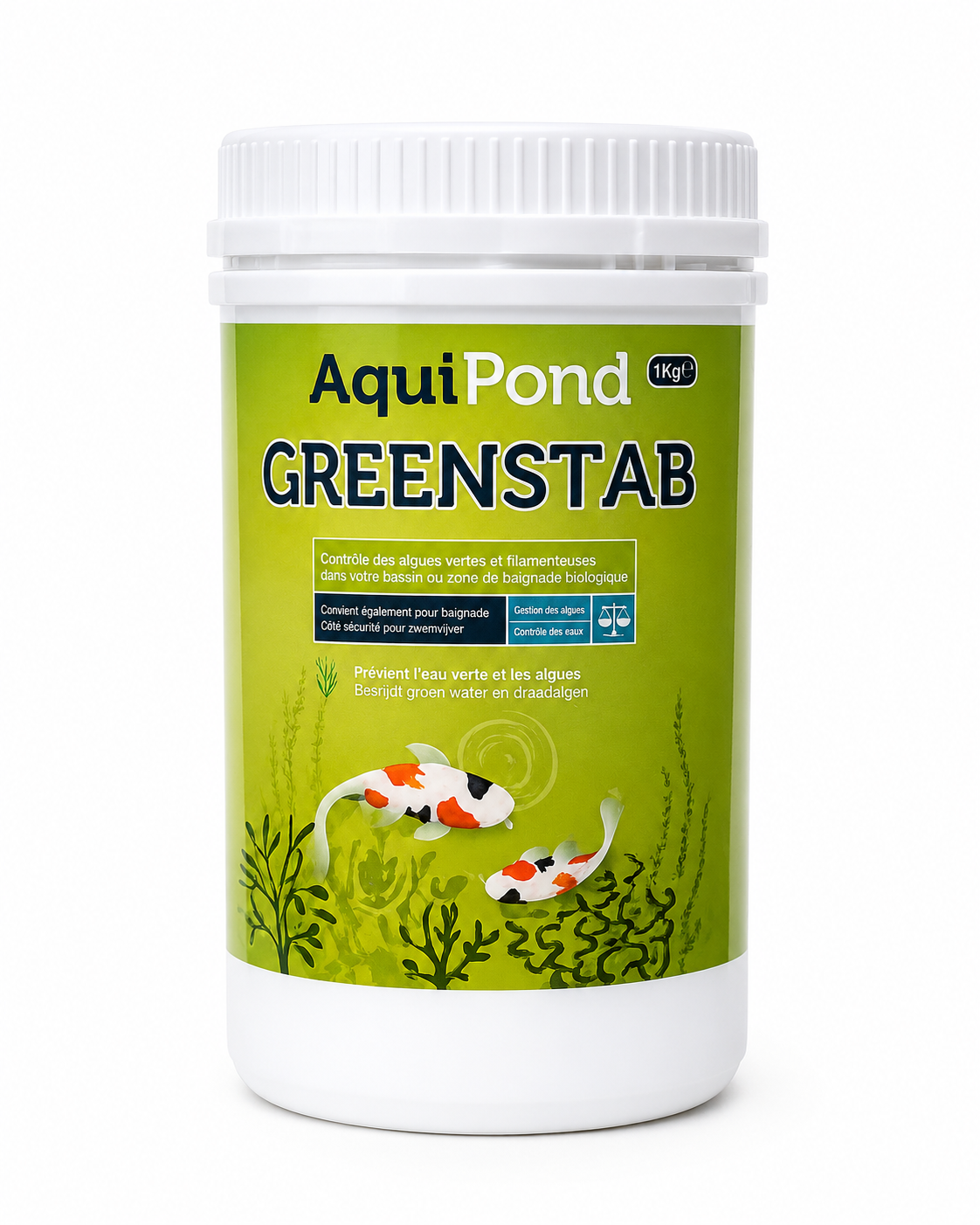
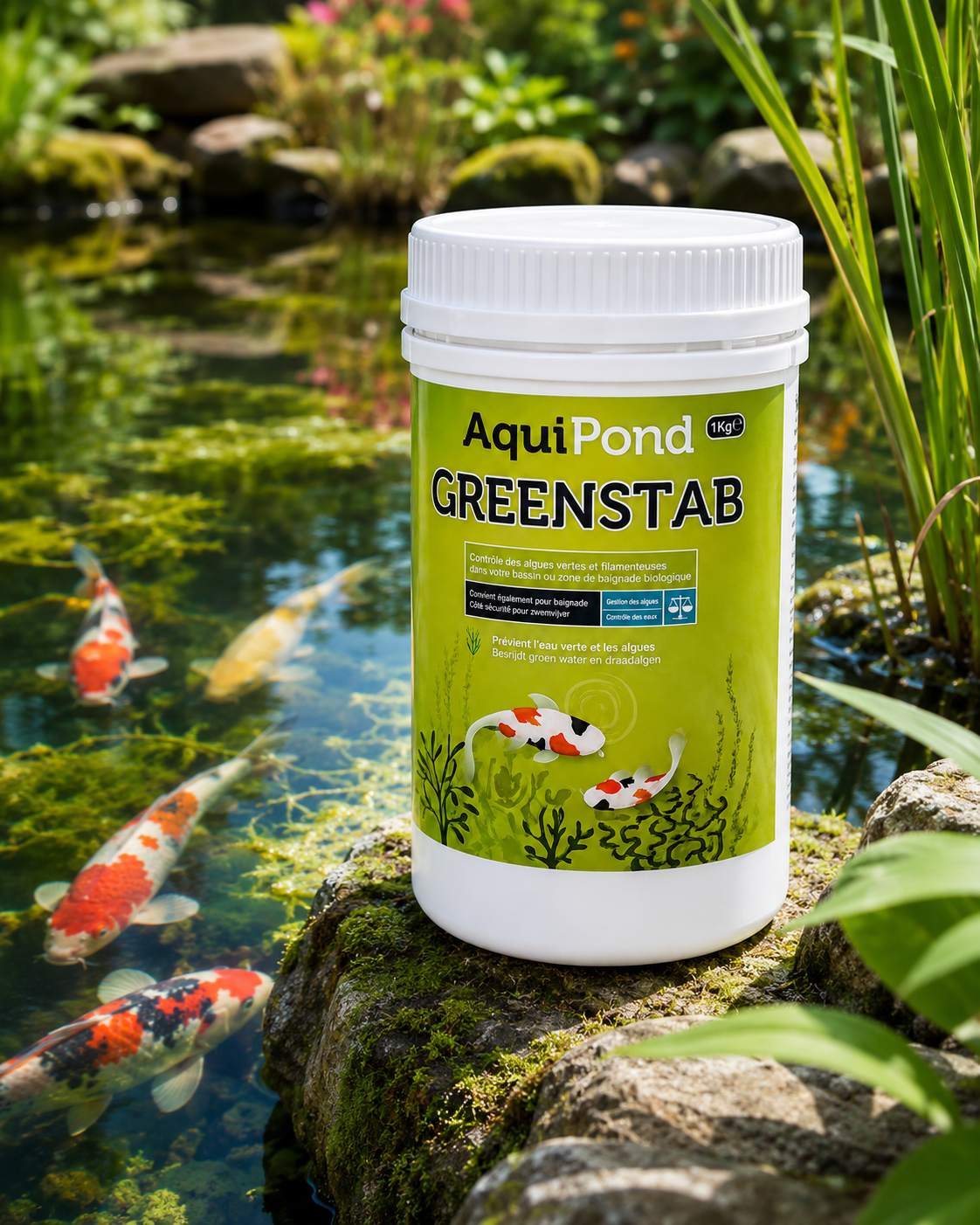
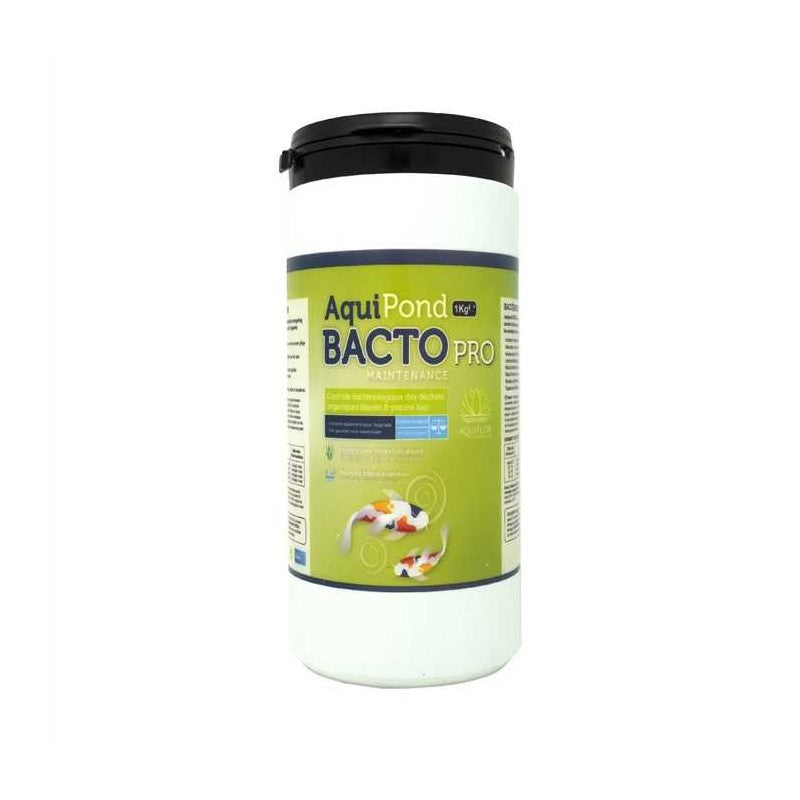
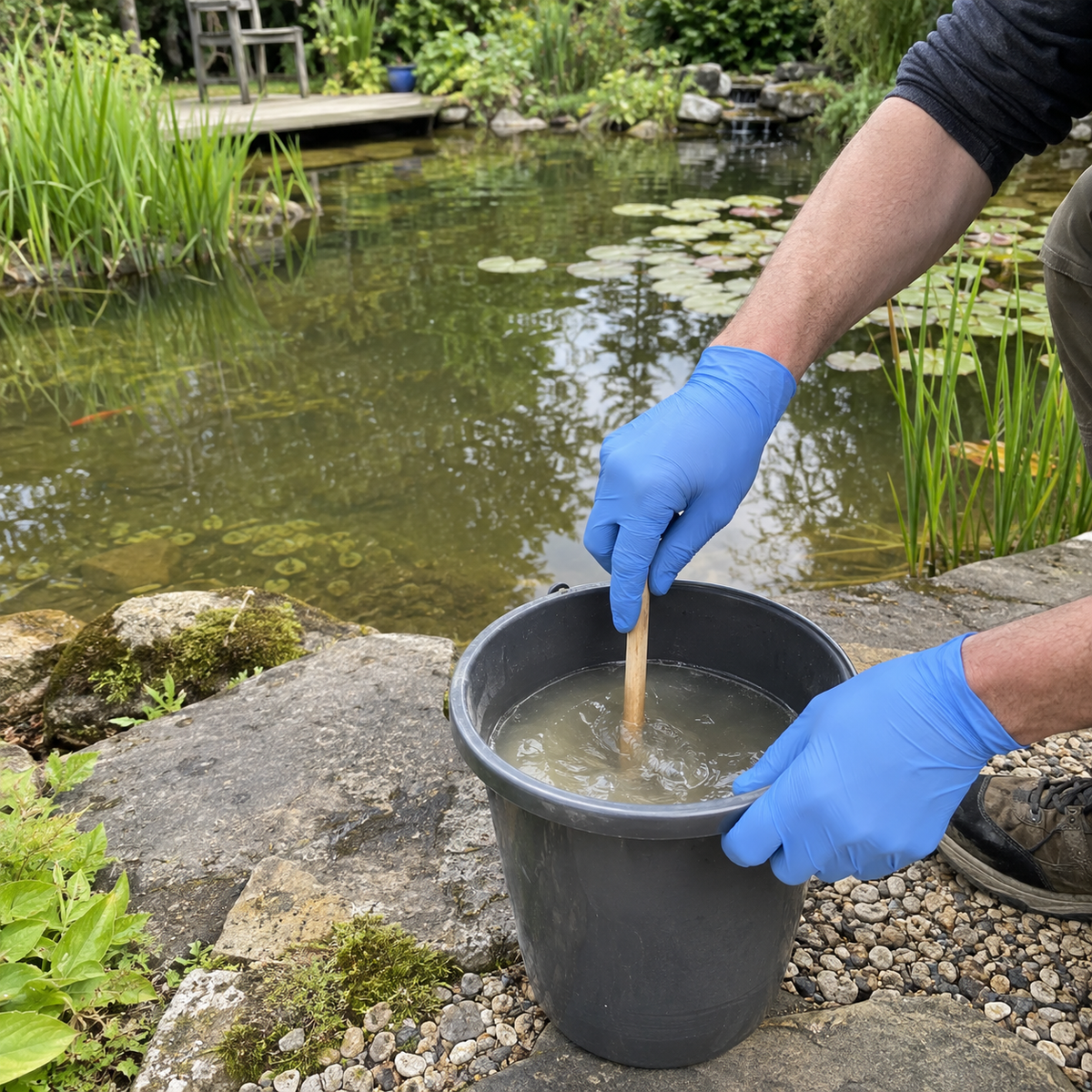
Biological clarifiers are products based on selected bacteria and enzymes that consume algal nutrients and promote the flocculation of particles. Unlike chemical treatments, they do not disrupt the ecosystem and are safe for fish and plants.
Denser planting is the most sustainable solution. Oxygenating and fast-growing aquatic plants (water lilies, reeds, water irises, watercress) directly absorb phosphates and nitrates from the water, thus depriving algae of their food. For a well-balanced pond, plants should cover at least 50 to 60% of the surface.
Resolving the milky water problem
If the water is milky after planting or filling, patience is often your best ally: in most cases, the particles settle naturally in a few days as soon as the filtration kicks in. To speed up the process, a flocculant (natural coagulant) can be used: it clumps fine particles into lumps that are easier to filter. Avoid unnecessarily stirring up the bottom of the pond.
Eliminating tannins and organic matter
Regularly remove dead leaves and decomposing vegetation using a net. Partially drain the water if the coloration is intense (20 to 30% of the volume). Adding activated carbon to the filter is very effective for adsorbing tannins and clearing the water quickly. Also, consider installing a protective net in the autumn to avoid the accumulation of dead leaves.
Controlling phosphates
Phosphate traps (ion exchange resins) can be placed directly into the filter compartment. They capture dissolved phosphates before they feed the algae. These filter media gradually become saturated and must be replaced every 1 to 3 months depending on the load of your pond. Regular water testing will allow you to monitor the development of levels.
Optimizing filtration
Check that your pump flow rate is adapted to the volume of your pond. Regularly clean mechanical filter media (foam, rock wool) without ever rinsing them with chlorinated tap water, which would destroy the nitrifying bacteria. In summer, ensure that the water temperature does not exceed 28°C, as beneficial bacteria are less effective above this.
Long-term prevention: best practices
A healthy pond in the long term is primarily based on biological balance. Here are the habits to adopt to minimize the risks of cloudy water:
- Feed fish reasonably: any food not consumed in 5 minutes is too much and will eventually enrich the water with algal nutrients.
- Perform regular partial water changes: replacing 10 to 15% of the volume each month helps eliminate accumulated nitrates without disturbing the biological balance.
- Test the water regularly: pH, KH, nitrites, nitrates, and phosphates should be monitored at least once a month. Simple test kits allow you to detect imbalances before they become visible.
- Prepare the pond for the change of season: in spring, adding starter bacteria restarts the biological cycle after winter. In autumn, removing dead leaves and reducing feeding prevents crises.
- Avoid aggressive chemical treatments: powerful algaecides may eliminate algae quickly, but they disrupt the pond's ecosystem and can unbalance the fauna and flora in the long term. Prefer biological solutions.
When to take emergency action?
If, despite all these measures, the water remains cloudy or you observe fish mortality, foul odors, or persistent foam, it is time to act quickly. An emergency partial drain (30 to 50% of the volume), combined with a shock treatment of bacteria and a complete check of the filtration, usually allows you to restore balance in a few days.
Find all the necessary products at Aquiflor
At Aquiflor, we offer a complete range of solutions to treat and prevent cloudy water: UV lamps adapted to all volumes, biological clarifiers, phosphate traps, quality filter media, activated carbon, and complete test kits. Our teams are at your disposal to advise you on the most suitable solution for your pond.
Your pond deserves crystal-clear water — and we have everything needed to achieve it.