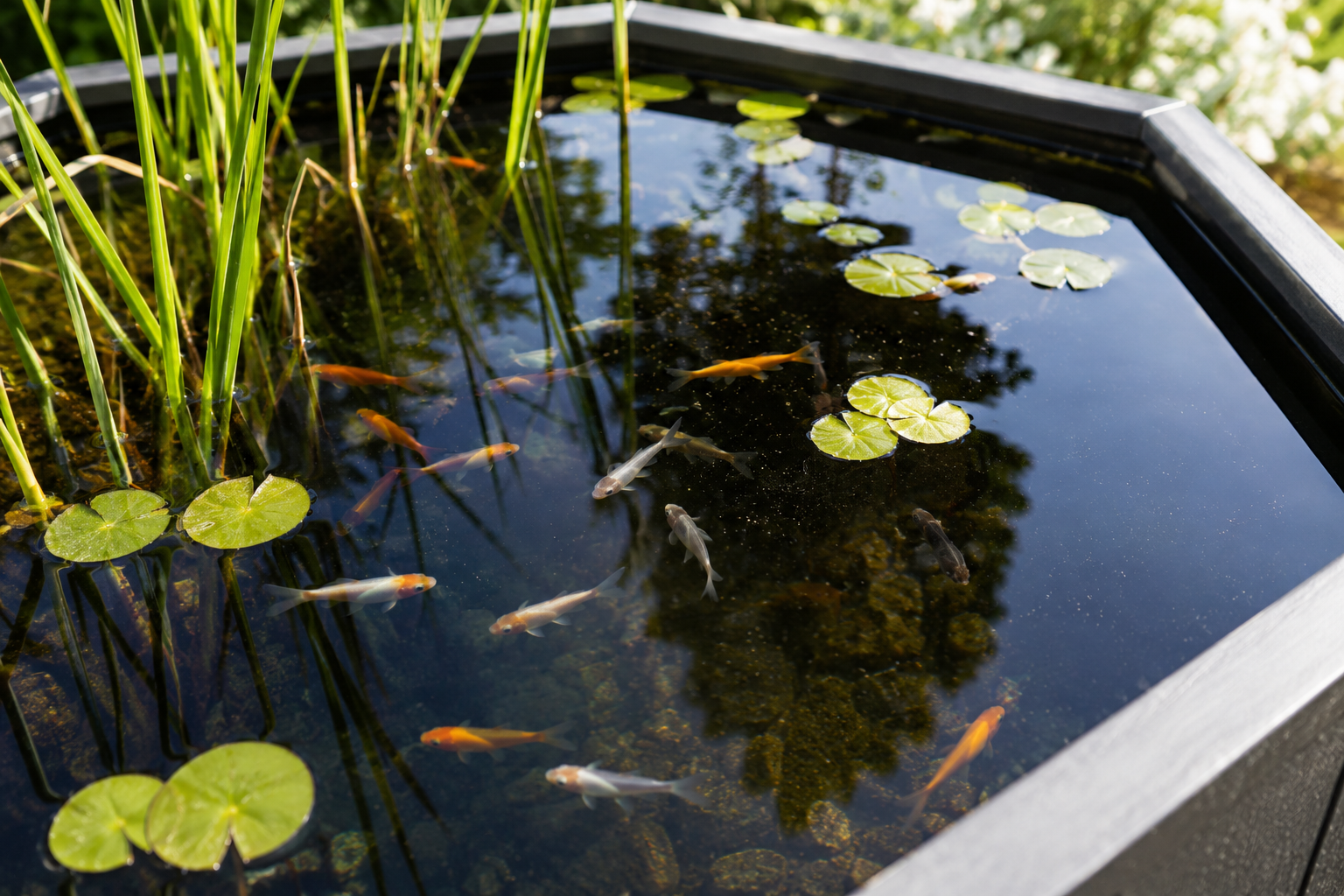
After swimming in a natural pool, some people notice the appearance of small, red, sometimes intensely itchy bumps. This phenomenon, frequently reported by owners of biological swimming ponds, has a specific medical name: cercarial dermatitis, more commonly known as "swimmer's itch." Far from being an anecdote, it is based on a well-documented biological mechanism that is useful to understand in order to anticipate it.

An immune reaction, not an infection
Swimmer's itch is neither a bacterial infection nor a consequence of "dirty" or poorly maintained water in the chemical sense. It is a hypersensitivity reaction (types I and IV) triggered by the skin penetration of microscopic larvae called cercariae. These larvae most often belong to the genus Trichobilharzia, avian schistosomes closely related to the Schistosoma genus responsible for human schistosomiasis, but without the ability to cause the latter disease.
The biological cycle behind the problem
The cycle of these parasites requires three successive links:
- The definitive host: Waterfowl (mallards, swans, geese, coots) harbor adult worms in their blood vessels. Eggs are discharged into the water via their droppings.
- The intermediate host: The eggs release ciliated miracidia that infect freshwater gastropod mollusks, mainly pond snails (family Lymnaeidae). Inside the snail, the parasite multiplies.
- The accidental host: The snail releases swimming cercariae into the water, which actively seek a new bird. When a human swimmer is in their path, they penetrate the skin by mistake. Unable to survive in humans, they die rapidly—it is this death and the accompanying immune reaction that cause the symptoms.

Why are natural pools affected?
Natural pools, by design, combine a swimming area with a vegetated filtration zone rich in aquatic plants. This ecosystem, precious for the biological purification of water, also creates conditions favorable to the presence of freshwater mollusks: organic substrate, dense vegetation, stagnant or low-turnover water, and shallow areas exposed to the sun. Several risk factors documented in scientific literature overlap with the very characteristics of these ponds:
- shallow water depth in shore and lagooning areas, where pond snails concentrate;
- high water temperatures in summer, the period when the release of cercariae by snails is at its maximum;
- positive phototaxis of cercariae, which causes them to rise toward the surface and light during the day, precisely when human activity is at its peak;
- the regular presence of waterfowl attracted to these vegetated water points.
The phenomenon is not specific to one country: cases have been documented throughout Europe (Germany, Belgium, France, Switzerland, Austria, the Netherlands, Scandinavia) as well as in North America. In Belgium, a case of cercarial dermatitis was formally linked in 2022 to an infestation by Trichobilharzia regenti in a private pond in the Kampenhout region—the first identification of this specific species on Belgian territory, confirmed by molecular biology analyses on snails collected on-site.
Symptoms and progression
The typical timeline is as follows:
- within an hour of swimming: a tingling or burning sensation at the moment of skin penetration;
- a few hours later: appearance of small red papules, sometimes topped with vesicles, resembling insect bites;
- the following days: itching that may intensify, generally persisting from a few days to about ten days, and exceptionally longer.
One point deserves to be highlighted with rigor: in case of repeated exposure, the immune reaction can become faster and more pronounced during subsequent contacts, sometimes with general symptoms (mild fever, malaise). This immune sensitization mechanism explains why some regulars of the same pond report increasingly strong reactions from one season to the next.
Swimmer's itch is not contagious—it is not transmitted from one person to another—and it does not, in itself, constitute a serious pathology. The main risk associated is a secondary bacterial superinfection from scratching, which should therefore be avoided as much as possible.
What swimmer's itch is not
It is important to dissociate this phenomenon from certain misconceptions:
- it is not linked to the degree of water pollution in the classic microbiological sense;
- it is not an allergy to chlorine, since natural pools do not, by definition, contain it;
- it must not be confused with bacterial folliculitis (linked to a proliferation of Pseudomonas aeruginosa in insufficiently renewed water), whose clinical appearance differs (pustules centered on hair follicles, appearing rather 12 to 48 hours after swimming).
Prevention: measures based on the biological cycle
Since the mechanism is now well characterized, prevention measures logically follow:
- Dry off actively and quickly upon exiting the water, by rubbing the skin with a towel rather than letting it air dry: cercariae need only a few tens of minutes out of the water to penetrate the skin if they are not mechanically dislodged.
- Take a shower after swimming when possible.
- Limit time spent in shallow water, particularly in areas with high vegetation density where intermediate host mollusks concentrate.
- Monitor and limit the settling of waterfowl on the pond, within reason, since they complete the parasite's cycle.
- Maintain the pond's biological balance: a layer of sludge and excessive organic matter in the bank area promotes both the development of mollusks and, more broadly, the overall imbalance of the pond's ecosystem. Regular management of this organic matter is part of a fundamental approach that complements the individual actions listed above.
Treatment: symptomatic management
There is no specific treatment targeting the parasite itself, as it dies naturally in the skin within a few days. Management therefore focuses on relieving discomfort:
- soothing local applications (calamine lotion, cool compresses, bath with baking soda or colloidal oatmeal);
- oral antihistamines if the person's health status permits;
- avoid scratching and keep nails short to limit the risk of superinfection.
A medical consultation is recommended in case of general symptoms (fever, malaise), signs of skin superinfection (heat, pus, rapid extension), or abnormal persistence of itching beyond ten days or so.
In summary
Swimmer's itch in natural pools is explained by a specific parasitic cycle involving waterfowl, freshwater snails, and accidental human swimming. It is neither a sign of a lack of hygiene nor a serious pathology, but its frequency is directly linked to the very characteristics of ecological pools: stagnant water, shallow areas, and abundant vegetation. Understanding this mechanism allows you to act with simple, scientifically-based measures, rather than giving up the pleasure of natural swimming.
Scientific sources: literature reviews on cercarial dermatitis (Trichobilharzia spp.) published in peer-reviewed journals (Parasites & Vectors, PeerJ), information sheets from Swiss, Belgian, and Canadian public health authorities, and a case study documenting the presence of Trichobilharzia regenti in Belgium (Kampenhout, 2022).