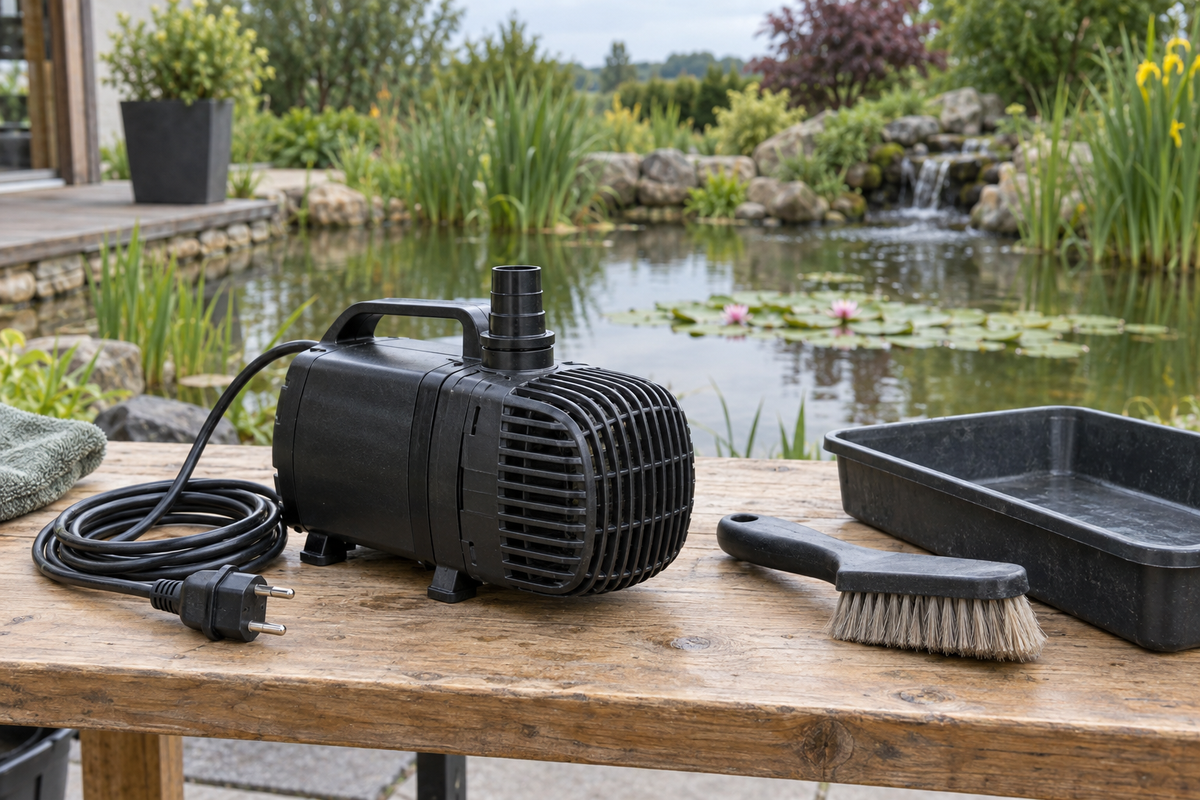
Your fountain stops and the controller displays Er6. Before ordering a new pump, you must understand what this code indicates. For the AquaMax Eco Classic 9000 C, 12000 C, and 18000 C covered by the consulted OASE manual, Er6 corresponds to dry running.
The priority is therefore to check the water supply. A pump installed in a pond may lack water if its intake is obstructed or if the water level drops. And a "dry" installation means the motor is placed outside the pond: the pump must always receive water while it is operating.

Start with the exact reference and code
Take a photo of the screen before any manipulation. Also, note the reference on the pump's data plate and the controller's label. The "C" suffix matters: advice for another AquaMax or an older controller is not necessarily applicable.
Note when the message appears: at startup after winter, right after cleaning, after several hours of operation, or when the pond level drops. This timeline provides a much more precise clue than just stating "the pump no longer works."
For example: if the incident follows work on the pipes immediately, check what was moved first. If the problem appears after several days of a falling water level, examine the water supply and the cause of this drop. These observations guide the diagnosis without, on their own, proving the source of the breakdown.
Make the installation safe
Unplug the controller from the mains before intervening. Its stop button does not replace this disconnection. Before touching the water, disconnect any electrical equipment located in it. A pump with a damaged cable or housing must not be put back into service.
Keep the controller out of the water. Only perform the maintenance operations provided for in the manual for your version. An abnormal odor, a damaged plug, or a tripped electrical circuit requires professional inspection.
If the pump is submerged: examine the level and the water inlet
First, observe the area where it operates. The visible level near the patio is not always that of the technical compartment: a passage between two zones can be congested even if the main pond seems sufficiently full.
After switching off the power, check if leaves, filaments, or debris have accumulated around the suction. A local pile can be discreet from the bank. Water that is fairly clear on the surface does not mean the bottom is clean.
Photograph the layout before removing the equipment. This reference prevents you from putting the pump back against a wall, in a hollow full of sediment, or under an element that obstructs its intake. When reassembling, ensure full submersion and the stable position specified by OASE.
If the level has dropped, also look for the reason: evaporation, a leak, filter overflow, or water sprayed outside. Adding water without monitoring its trend may only postpone the next shutdown by a few hours. A dated mark on the bank helps compare observations.
If the pump is installed out of the water: follow the suction circuit
Simply draw the path from the pond to the pump. Identify valves, fittings, baskets, and any pre-filters. This overview facilitates an orderly check and allows you to clearly describe the setup to an advisor.
- Was a valve left closed after maintenance?
- Has the hose been kinked, moved, or compressed by an object?
- Is an accessible basket loaded with waste?
- Was a fitting disassembled just before the incident?
- Does the water supply maintain itself when the system starts?
These points are inspection paths for the circuit, not a list of guaranteed causes for every Er6. Have the priming and hydraulic layout confirmed if you are unfamiliar with your installation. Repeating trials on a poorly fed circuit does not provide a reliable diagnosis.
A recent modification deserves special attention. Replacing a hose with a smaller diameter, adding fittings, or moving the equipment changes the circulation conditions. Keep dimensions and photos so you can evaluate these changes.
Clean what is actually hindering operation
Distinguish soft waste from limescale. Leaves and filaments are removed mechanically. For stubborn limescale, OASE cites PumpClean in its manual. Disassembly, cleaning, and reassembly must follow the document corresponding to the pump.
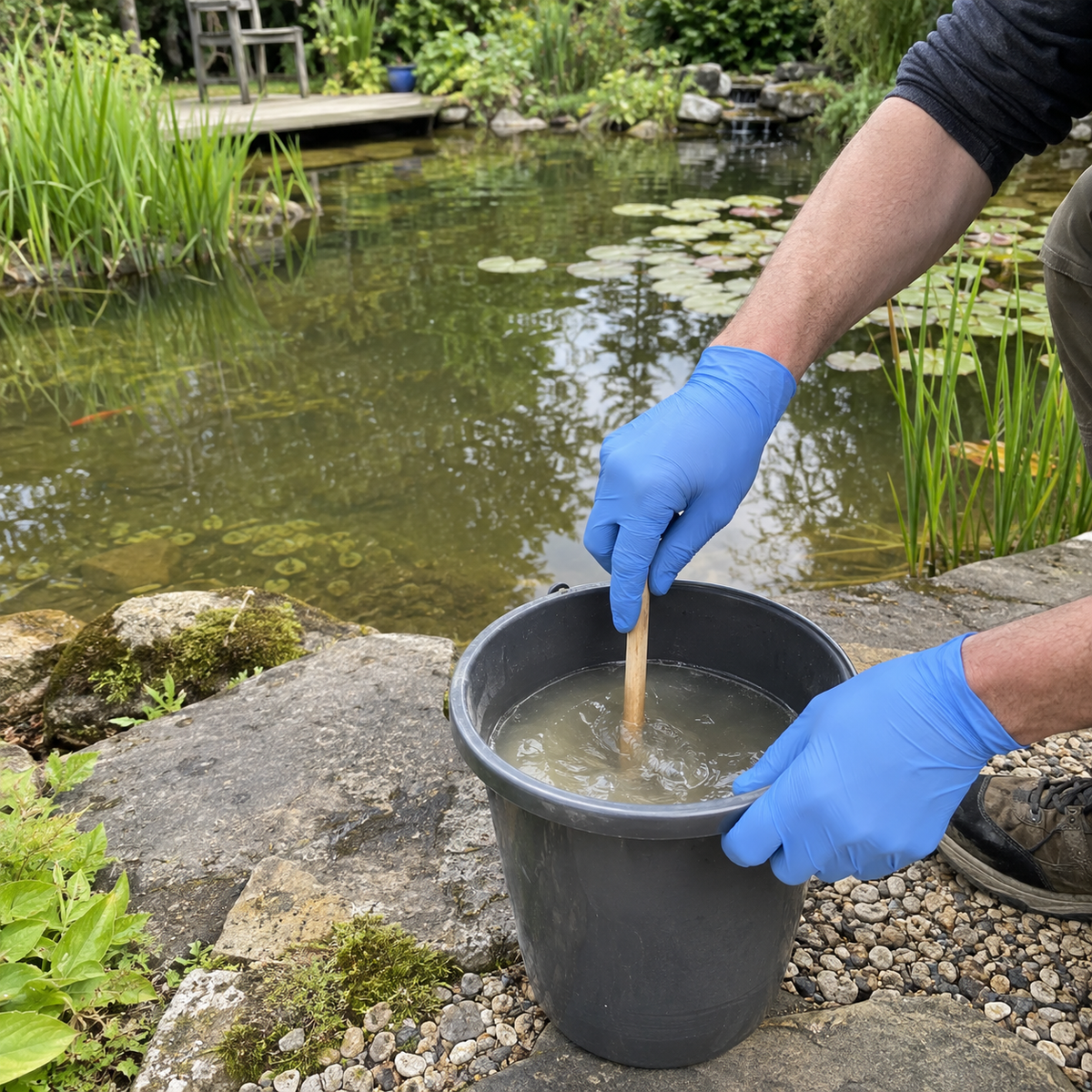
AquaActiv PumpClean 500 ml is a maintenance product for equipment. Prepare the solution and respect the durations indicated on its packaging; rinse the elements thoroughly before returning them to the circuit.

Targeted cleaning addresses identified deposits. It does not repair a damaged component and does not restore a closed water supply. If a part shows visible wear or damage, send its photo with the full reference before choosing a replacement.
Sludge keeps returning around the pump: act on the pond as well
A water intake regularly buried under deposits reveals a need for broader maintenance. Look at where leaves arrive, how waste circulates, and which areas accumulate matter.
A PondoVac 4 vacuum allows for the removal of deposits accessible by zone. This extraction must be controlled: monitor the level while working and adapt refilling to the pond's needs.
Aquipond Bactovase can assist in managing the organic fraction of sediments, according to its manual. Its action is part of pond maintenance; Er6 first requires re-establishing the hydraulic supply to the pump.
A photo of the area after cleaning will serve as a point of comparison. If the same pile returns quickly, reviewing waste passage and the frequency of removal will be more useful than repeating the disassembly without other changes.
Prepare an observable restart
Once the cause is corrected and the assembly verified, follow the startup procedure in the manual. OASE indicates that the message resets after the fault is cleared.
Stay present to observe the return of water, the level in the compartments, and the possible reappearance of the code. Note the delay if the shutdown recurs. A few moments of operation are not enough to confirm that everything is back in order.
If Er6 persists, stop the tests and prepare the elements for technical service. Changing several things at once makes the result difficult to interpret; a clear record of each intervention will help pursue the diagnosis.
Protect the pond during the shutdown
Circulation contributes to filter function and, depending on the installation, to gas exchange. During a prolonged breakdown, observe the fish and monitor water quality. The OATA recommends, in particular, monitoring nitrogen compounds and maintaining appropriate filtration care.
An independent, correctly sized aeration system can be useful. The AquaOxy 1000 is an example of equipment dedicated to this use; its choice depends on the pond and the population. It does not replace the mechanical and biological functions of the filter.
Avoid continuing heavy feeding while waste processing is disrupted. If the fish have difficulty breathing or gather at the surface, water quality and oxygenation become priorities: seek adapted advice quickly.
Information to provide for precise assistance
| Prepare | Why it is useful |
|---|---|
| Photos of plates and screen | Identify the version and the exact message. |
| View of the pond and circuit | Understand the water supply and setup. |
| Date and circumstances of first shutdown | Relate the incident to any changes. |
| Checks and cleaning already performed | Continue diagnosis without repeating same tests. |
Choose the right maintenance for your pump
Start by identifying the cause of the shutdown. If inspection reveals limescale on the relevant elements, consult the recommended cleaner's instructions and your pump's manual.
Sources
- OASE — AquaMax Eco Classic 9000 C / 12000 C / 18000 C Manual, sections on errors, installation, and maintenance.
- OATA — How to look after pond fish: water monitoring and filtration.
- OASE — How to calculate total dynamic head: influence of the hydraulic circuit.
- Aquishop product sheets linked in the article: PumpClean, PondoVac 4, Aquipond Bactovase, and AquaOxy 1000.