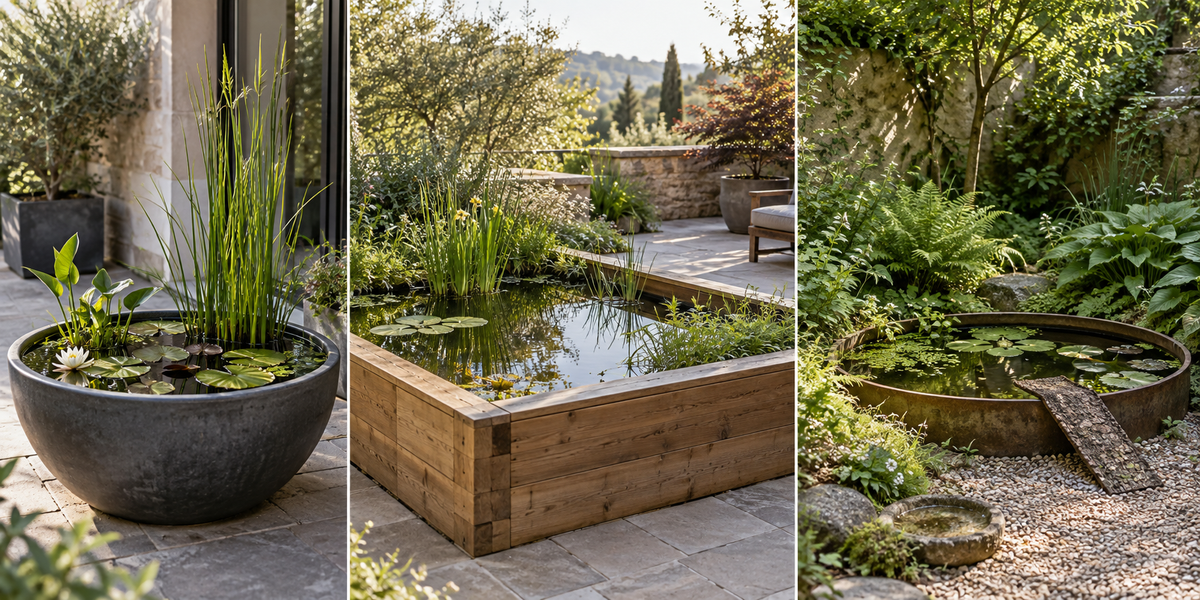
The best terrace pond is one that suits your space and remains easy to maintain. A large planted pot can be enough to create reflections near a bench. A rectangular pond can structure a patio. A low water feature, connected to the garden, can better encourage visits from small wildlife.
Here are fifteen ideas to help you choose a direction. They can be combined, but keep one priority: still water, plants, sound, or observation. Before filling with water, check the container and its support. On a balcony or raised terrace, the total weight must be validated for the intended location.

1. The large aquatic pot near a bench
A round container brings together a small scene within easy reach of the eye. Place a vertical plant on one side, lower vegetation, and a reflection area. The effect comes from the contrast between the leaves and the open water. Choose a pot that is truly watertight, suitable for aquatic life, and resistant to outdoor conditions; ordinary decorative pottery does not necessarily possess these qualities.
2. The contemporary rectangular pond
A rectangular shape pairs well with a terrace with clean lines. It can visually extend a facade or a low wall without occupying the middle of the walkway. Keep plantings grouped rather than spread evenly around the entire perimeter. The practical point to verify is access to the corners: you must be able to reach debris and remove baskets without walking on the coping.
3. The wood-clad pond
Wood cladding warms up the look of a water garden and pairs well with understated furniture. However, the structure and waterproofing must be designed for water pressure. A few boards assembled around a liner do not automatically form a reliable pond. Wood treatments, fasteners, and contact with water must be compatible with the project. Also, plan for future inspections.
4. The model with observation windows
Windows add a side view of the water. They may be of interest to those who wish to observe the inside of the pond from a low seat. They require gentle maintenance and a placement that allows access to the sides. If fish are considered, the choice always depends on the usable volume and their adult needs. A window does not make a small pond suitable for large species.

See the Half Moon Mocha and check the version, dimensions, and included equipment before preparing its location.
5. The plant corner at multiple heights
Place the pond in front of a few terrestrial pots of different sizes to visually connect the water to the rest of the terrace. Plants outside the tub provide volume without consuming its aquatic surface. However, keep roots, potting soil, and watering runoff in their place. A fertilized pot that drains into the pond can introduce unwanted nutrients and alter the water's balance.
6. The minimalist water garden
A single well-placed clump can be enough when the container has a beautiful shape. The Acorus gramineus ‘Ogon’ is a good option for low foliage in a suitable wetland area. The choice must respect its planting depth. This composition primarily requires letting the space breathe and containing the plant's growth throughout the seasons.
7. The mini-pond blooming in spring
To enjoy the water feature early, build the composition around a spring-flowering plant, such as the marsh marigold, if the container allows for its correct installation. Add interesting foliage after blooming so that the tub does not lose all its appeal. Plants should be chosen for seasonal succession, not just for their appearance at the time of purchase.
8. The compact water lily pond
A few floating leaves and a flower can become the centerpiece. Ask for a water lily cultivar suited to the surface area and depth of the container. A plant sold under a simple color name does not provide enough information about its growth habits. Also, avoid jets that continuously wet the leaves if the variety and composition require calmer water.
9. The patio pond with subtle sound
A slight flow can accompany a reading or dining area. Choose movement proportional to the water reserve and test the sound from the places actually used. A small waterfall near a wall can be louder than imagined. Verify that splashes fall entirely into the tub, even in light wind, and provide a suitable electrical installation.
10. The water blade against a low wall
For a more architectural effect, a blade like the Waterfall XL 60 can be integrated into a structure designed to receive it. This idea requires more preparation: spillway level, accessible connections, a suitable pump, and a sufficiently large basin to catch the water. It is not just a matter of attaching a water outlet above a small pot. Test the assembly before finishing the construction.
11. The low water feature connected to the garden
A low pond placed at the transition between the terrace and vegetation can facilitate visits from terrestrial wildlife. Install a rough and stable exit from the water, then access from the ground if the edges require it. Small animals must be able to leave even when the water level drops. Keep vegetated refuges nearby without completely masking the surroundings and pathways.
12. The pond in front of a sober hedge
A calm green background highlights reflections and the silhouettes of aquatic plants. The container becomes a focal point without adding much decoration. Leave a workspace between the hedge and the pond for pruning and debris removal. Avoid spraying treatment products or fertilizers into the water, and protect the water feature during nearby maintenance.
13. The duo of independent containers
Two small water gardens with similar shapes can frame a seating area or add rhythm to a terrace. Keeping them independent is sometimes simpler than a waterfall between two levels. However, each container must have its own depth, volume, and maintenance. The cumulative weight matters for the support. Do not assume that two small tubs pose fewer constraints than one larger one.
14. The composition visible at night
Discreet lighting can highlight the container or a clump of plants. Avoid lighting the entire surface like a display case, especially if you wish to welcome wildlife. The MultiBright SolarFloat 20 is an example of floating lighting to consider based on available volume and solar charging conditions. Plan for measured use and do not count on identical battery life every night.
15. The seasonal pond easy to evolve
Plants in accessible baskets allow you to adapt the composition without emptying the entire container. You can move a clump that has grown too large, divide a plant, or change a point of view. Planting baskets must remain proportional to the volume. Prepare the container and plants for winter before the first hard frosts, especially for a tub exposed on all sides.
How to choose from these fifteen ideas?
First, select those that match your intended use. To observe plants up close, choose an accessible and uncluttered composition. For sound, study the water circuit. For biodiversity, prioritize access points, refuges, and the absence of fish in a dedicated mini-pond.
Then check four points: total weight, exposure, space for maintenance, and behavior in winter. A small volume can heat up or cool down quickly. The choice of container must therefore be as practical as it is aesthetic. A well-prepared installation will be easier to keep than a spectacular but inaccessible decor.
Send your favorite idea and a photo of the location to support@aquiflor.com. Include the available dimensions and the type of support to select a suitable pond and plants.
Sources and practical inspirations
- RHS: Water garden shapes and container ponds.
- The Wildlife Trusts: mini-ponds and wildlife access.
- RHS: Choosing plants according to their size and depth.
- Aquishop product sheets linked in this article, to check dimensions and equipment before purchase.