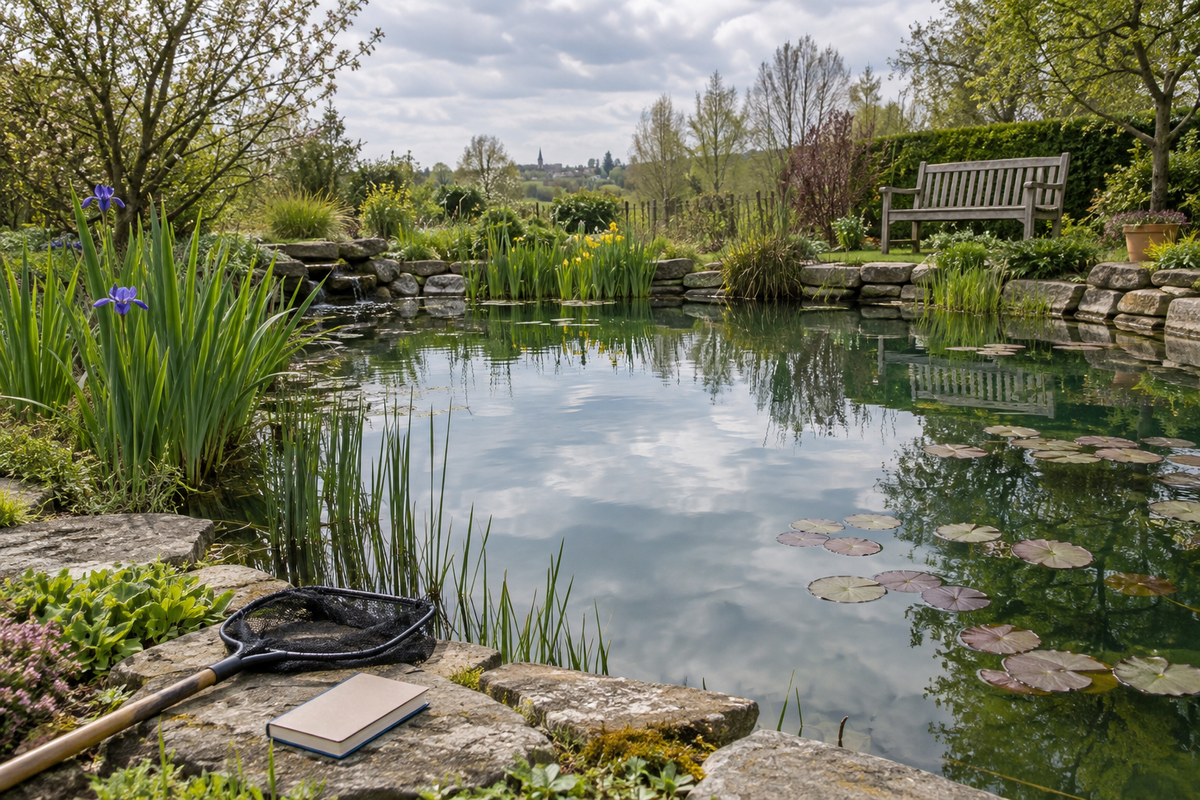
A pond changes its appearance throughout the year. In spring, plants start growing again and fish become more active. In summer, the heat alters oxygen requirements. In autumn, leaves accumulate. In winter, maintenance focuses on monitoring and protecting equipment.
The right schedule follows the state of the pond, the water temperature, and the weather. A fixed date is not enough to decide when to feed more, vacuum the bottom, or winterize a filter. Here is a practical organization to know what to look for and when to intervene.

The routine that remains useful all year round
Start by looking at the pond before touching anything. Are the fish behaving as usual? Is the water level changing? Is the filter output steady? Is a new patch of vegetation blocking circulation?
These observations become more useful when written down. A notebook containing temperatures, analysis results, and maintenance performed is enough to track what changed before a problem occurred.
Also keep the reference numbers for your pump, filter, and UV. Maintenance and storage instructions vary between models, even within the same brand.
A heavily stocked pond, a natural pond, and a small pool without fish do not require the same frequency of intervention. Adapt your routine to the actual load and the purpose of the water feature.
In spring: check before accelerating
The first task is to check the equipment after winter: hoses, fittings, seals, pump intake, and filter circulation. If the system was shut down, follow the restart procedure in your manual.
Remove waste that hinders operation, without brutally cleaning the entire bottom. The animals present in the plants and sediment require careful intervention, especially when reproduction begins.
Monitor ammonia and nitrites during the restart of biological filtration. Fish that have become active again may produce more waste before the system regains its usual capacity.
Increase feeding gradually, depending on the species, water temperature, and the feed instructions. The rapid disappearance of a ration does not prove that the filter can already handle a significant increase.
Inspect the UV light without turning it on outside its housing. The lamp reference, service life, and quartz condition should be checked according to the manual. Not all technologies follow the same replacement schedule.
In early summer: supporting growth
Plants take up more space. Clear the water intakes and remove accessible damaged parts. If a species becomes dominant, thin it out gradually instead of removing shelter for small fauna all at once.
Observe fish consumption. Pellets left on the bottom or food distributed without measuring increase waste. Adjust quantities before looking for a water treatment.
Check skimmer baskets and mechanical filtration more often when plant growth is strong. The captured waste must be removed: a filter full of organic matter does not make it disappear.
Water that turns green requires a diagnosis regarding sunlight, nutrients, and equipment. Distinguish between suspended microalgae and filaments attached to the walls before choosing a solution.
During heatwaves: monitor oxygen
Warm water holds less dissolved oxygen. In a productive pond, the nocturnal consumption of organisms can also lead to low levels at the end of the night.
Check aeration and circulation, especially after a breakdown, a very hot period, or a significant disappearance of algae. Observation early in the morning is a useful complement to afternoon checks.
If fish show signs of respiratory distress, quickly identify the cause and improve oxygenation with appropriate equipment. Avoid adding food or multiple treatments while waiting to understand the issue.
Do not initiate a major bottom cleaning during this period. Resuspending waste can complicate the situation. Oxygen measurement should be done with a test kit or a device intended for this parameter.
In autumn: limit waste that will overwinter
Collect leaves before they pile up on the bottom. A suitable net can be useful under trees, provided it remains well-installed, checked, and poses no entanglement risk to animals.
Prune plants according to their species. Some dry stems remain useful to invertebrates; other decaying parts are primarily a source of clutter for the pond. There is no identical cutting height for all aquatic plants.
When excessive deposits are accessible, zonal vacuuming with a PondoVac 4 or a PondoVac 5 helps organize their removal. Check the water level and plan for the disposal of the vacuumed material.
Aquipond Bactovase can supplement the management of the organic fraction of sediment, according to the instructions of the formulation used. Its gradual action does not replace the removal of leaf piles or the correction of soil runoff.
Before freezing: decide equipment by equipment
Prepare for winter by reading the instructions for each device. A pump, pressure filter, and UV may have different requirements for disassembly, draining, and storage.
The choice to keep filtration running also depends on the fish population, the pipe design, and the risk of freezing. Do not automatically shut down the entire installation on the first cold morning.
If a circuit remains active, ensure that an ice plug or frozen waterfall cannot divert water out of the pond. Plan for regular checks of the level and flow.
For species that significantly reduce their intake in the cold, follow the food instructions. Sturgeons require special dietary monitoring in winter: the rule applied to koi should not be copied for them.
In winter: observe without unnecessary disturbance
Monitor anti-icing devices, gas exchange, and animals. A suitable opening in the ice allows contact with air; it does not mean that all the water must be heated.
Do not hit the ice. Intervene with an appropriate device and from a safe bank. Also check access points that allow small animals to leave the pond.
An unexplained drop in water level should be monitored even in cold weather. Note the variation and inspect visible circuits before concluding that there is a liner leak.
What is the role of Aquipond treatments?
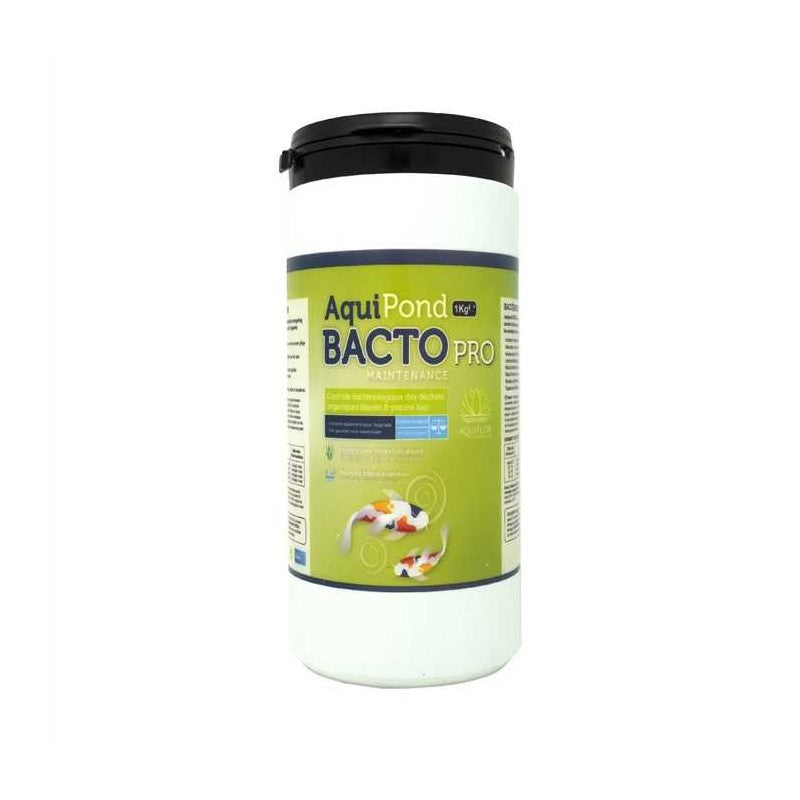
A product must meet an identified need. For the maintenance of organic matter, Aquipond Bacto Maintenance can be integrated into a monitoring program. Follow the conditions and preparation method indicated on its label.

For organic sludge, Bactovase meets a more targeted purpose. For insufficient hardness, you must first measure, then correct gradually with an appropriate product. Clear water is not an analysis.
No additive can sustainably compensate for an excessive population, an undersized filter, or regular waste inputs. Note the doses and dates to evaluate the program.
A schedule to adapt for your home
| Period | Priority | Points to note |
|---|---|---|
| Spring restart. | Circulation and biological filtration. | Temperature, NH4/NH3, nitrites, feeding restart. |
| Full growth. | Waste, plants, and pond load. | Flow rate, rations, algae development. |
| Heat. | Oxygenation and fish monitoring. | Morning behavior, temperature, breakdowns. |
| Leaf fall. | Reduction of organic input. | Deposit zones and state of protections. |
| Prolonged cold. | Equipment, ice, and level. | Winterization configuration and completed checks. |
Preparing your next maintenance session
Start with observations and measurements, then choose the equipment and products useful for your installation.
See JBL pond test kits →
Discover Aquipond Bacto Maintenance →
Consult the Aquiflor maintenance service →
Sources
- Royal Horticultural Society — Pond care: seasonal needs of plants and the environment.
- Royal Horticultural Society — Wildlife ponds: measured maintenance and habitats.
- Penn State Extension — Dissolved oxygen in ponds: heat and daily variations.
- OATA — Pond fish care: feeding and special needs of sturgeons.
- Aquishop product data sheets and equipment manuals; consult for each model.