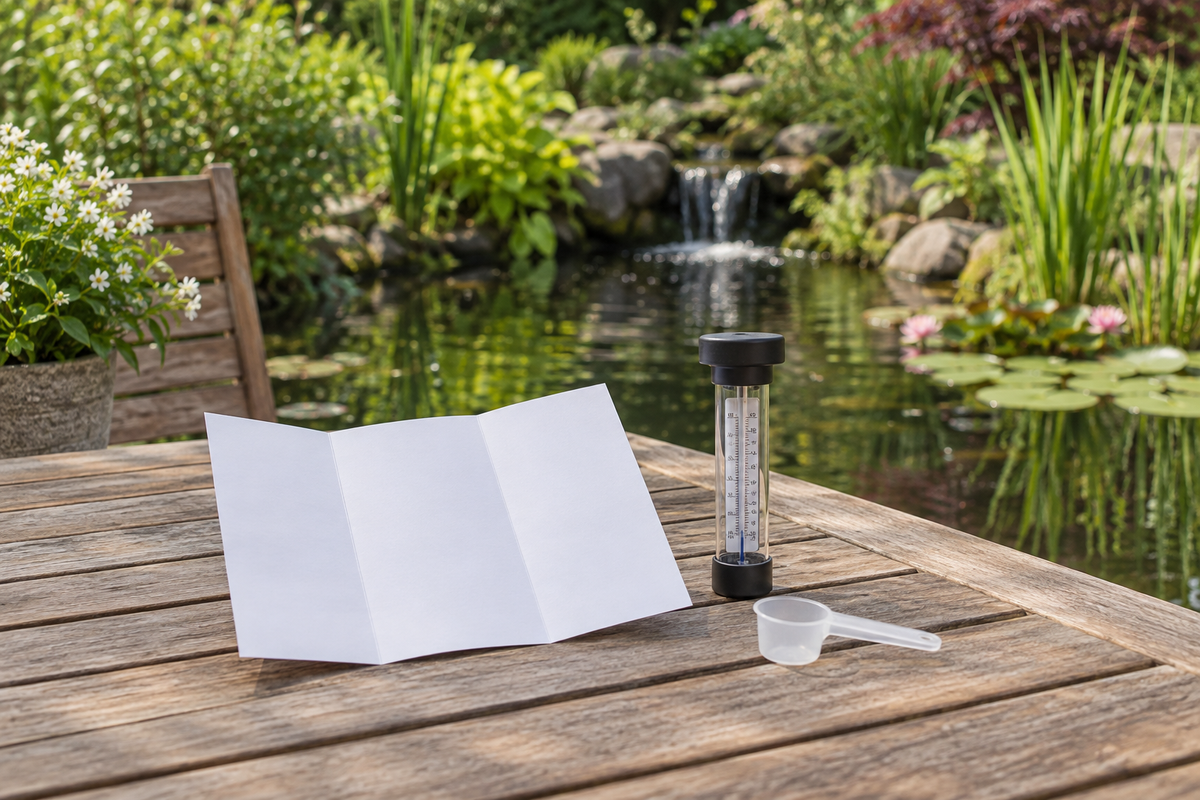
Instructions for using Bactogen can be found on the official Aquatic Science page and on the product packaging. If you have lost the manual, start by noting the reference number and size of your container. You can then verify that the information consulted corresponds correctly to the product in your possession.
Reading the instructions is not limited to a quantity of powder. Temperature, start-up phase, maintenance, and actual volume must be understood together. Here are the points that avoid the most frequent confusion.

Where can I find reliable information?
First, consult the manufacturer's page corresponding to Bactogen. It distinguishes between usage, start-up and maintenance doses, as well as storage conditions. The Aquatic Science documentation portal also allows you to find documents from the brand.
The Aquishop Bactogen product sheet for 12 m³ provides useful information on this reference. If an instruction seems different from that on your jar, send a complete photo of the label to have the version verified.
Avoid combining pieces of manuals from different products. Bactogen, Biobooster+, and another bacterial preparation do not necessarily have the same role or the same schedule.
What is Bactogen for?

Aquatic Science presents Bactogen as a preparation of bacteria, minerals, and trace elements intended for the maintenance of biological filtration and the management of organic pollutants.
This role does not exempt you from operating the filter, removing waste, and monitoring the water. The addition of a bacterial product does not demonstrate that the filtration is immediately ready to receive more fish.
If the animals are breathing abnormally or grouping at the surface, check the water conditions immediately and seek advice. Do not consider an application of bacteria as a sufficient response to an urgent problem.
Manufacturer indications to distinguish
The French page consulted provides for use when the water exceeds 10°C and distribution on the surface, in areas well circulated by the current. It recommends checking pH and hardness before any potential correction.
| Phase | Indication published by Aquatic Science |
|---|---|
| Start-up | 25 g per 5,000 liters per day, for five days |
| Maintenance | 25 g per 5,000 liters per application, three to four times per month |
The dose corresponds to two 12.5 g measuring scoops. Check this data on the current packaging. The phase to follow must correspond to the situation of the pond; you should not add the two programs together.
Moving from scoops to grams
A measuring scoop belongs to a specific reference. Its capacity should not be inferred from its resemblance to that of another jar. A kitchen spoon also does not constitute a reliable weight measurement.
The calculation based on the dose above comes to 5 grams per cubic meter per application. For an established 8 m³ pond, this represents 40 grams. If the start-up phase is chosen in accordance with the instructions, five applications represent a total of 200 grams.
Weigh with appropriate equipment and distinguish clearly between the daily quantity and the total program. Do not pour at once what is intended for several days.
Understanding the volumes indicated on the jar
A title such as "for 12 m³" cannot be read without its program. The packaging must be compared to the number of applications it contains and the dose actually required.
On the 300-gram presentation associated with 12 m³, the calculation of five applications of 60 grams uses the entire product. This does not mean that there is a reserve left for several months of maintenance afterwards.
Before ordering, note your initial need and your maintenance need separately. This method allows you to compare sizes without extrapolating the duration of a jar based solely on the displayed volume.
Measuring water temperature
Air temperature does not replace that of the pond. After a mild day, the water may still remain cold. Use a thermometer intended for this use and observe the trend rather than a meteorological impression.
The threshold published for Bactogen concerns this preparation. It should not be transferred automatically to all pond bacteria. Formulations and conditions of use may differ.
If you are hesitant about a resumption period or about a pond where the temperature varies greatly, send your measurements to the advisor. Adding more powder does not automatically compensate for unsuitable conditions.
What to do with the filter, UV, and other products?
Check the proper functioning of the circulation and the state of the mechanical parts. A clogged filter deserves maintenance in accordance with its manual. Preserve the biological media according to the method provided for the equipment.
The Bactogen page consulted does not provide a universal UV shut-off duration applicable to all installations. Therefore, do not add a rule found for another brand. Have the instruction corresponding to your reference and your circuit clarified.
Also list recent treatments. If you are using a pack or sequence including Biobooster+, follow the manual for this combination. Do not transform an indication for association into an obligation to systematically add all the products in the range.
Storing the product and keeping track of applications
The manufacturer's sheet provides for dry storage between 10 and 25°C and announces twelve months under normal storage conditions. Check the dates and indications on your jar.
Keep the original packaging with its label and use a clean, dry utensil. Unknown storage or a product with uncertain identity justifies verification before use.
Note the dates, quantities, and analysis results. Clearer water is not enough to evaluate all filtration. Checks must track the population, recent changes, and useful parameters.
Aquipond options according to need
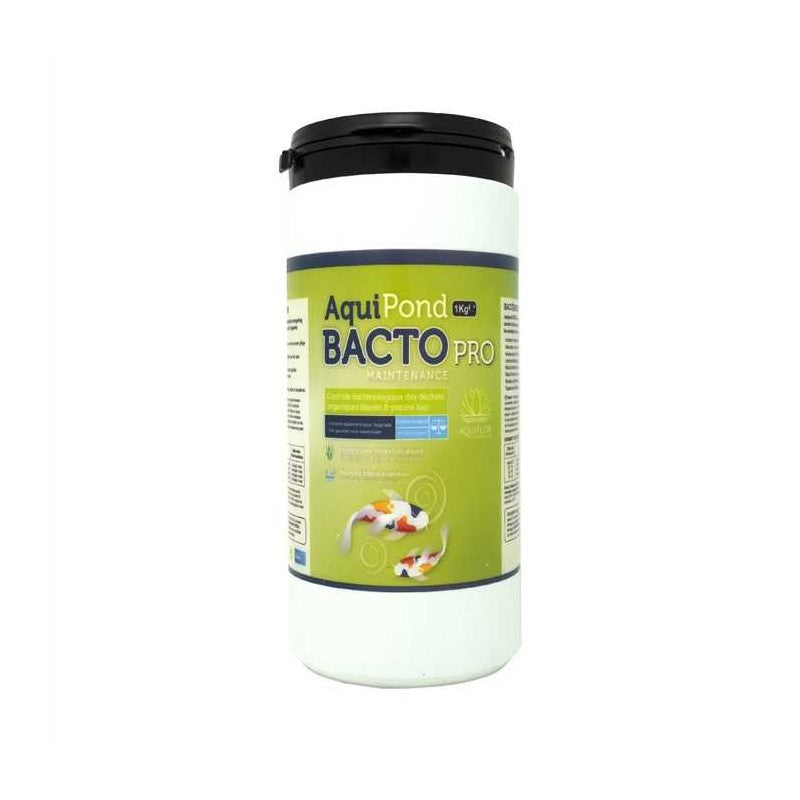
To prepare a biological maintenance program, you can also examine Aquipond Bacto Maintenance. Its preparation method is specific; it cannot be replaced by that of Bactogen.
For the organic fraction of the sludge, Aquipond Bactovase may be more directly linked to the identified need. It does not remove mineral deposits such as soil or sand.
When removal is necessary, a PondoVac vacuum allows you to study targeted cleaning. Provide for the evacuation of the aspirated water and monitoring of the level. The choice of bacteria and the choice of cleaning are built together, according to the state of the pond.
Have your reading of the manual verified
Send a readable photo of the jar, your water volume, the temperature, and the list of recent interventions to support@aquiflor.com. Specify if you are looking for a start-up or regular maintenance.
This preparation allows you to verify the reference, calculation, and schedule before application. Above all, it avoids confusing a dose, packaging, and a complete program.
Sources
- Aquatic Science — Bactogen, instructions for use, dosage, and storage.
- Aquatic Science — documentation portal.
- OATA — water quality monitoring and pond fish maintenance.
- Aquishop sheets for Bactogen, Bacto Maintenance, Bactovase, and PondoVac linked in the article.